Are Your Managers Equipped to Manage Absence Effectively?
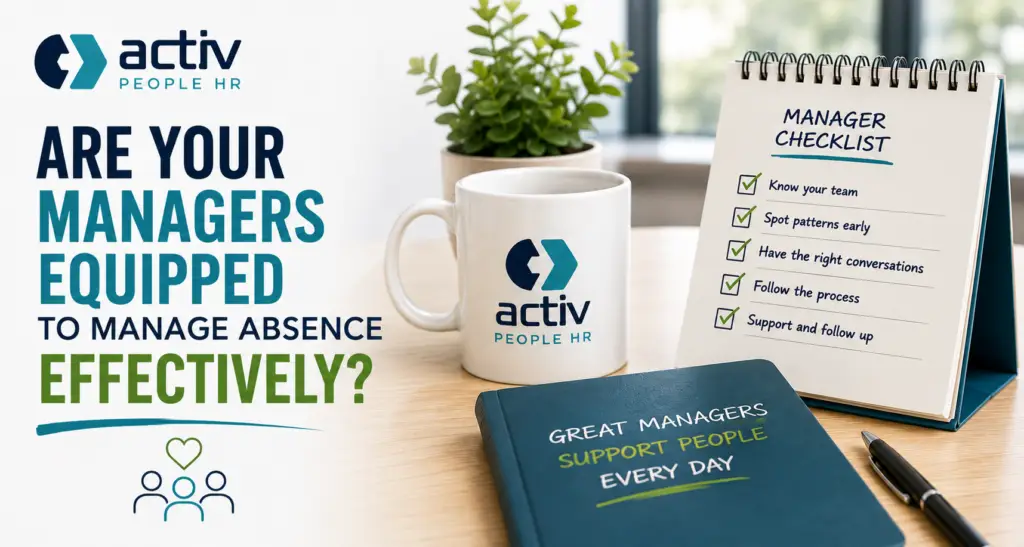
Managing employee absence isn’t solely an HR responsibility. In most organisations, it’s the line manager who receives the first call, welcomes an employee back to work and notices when something doesn’t seem quite right.
That makes managers a critical part of any effective absence management strategy.
But there’s an important question organisations should ask: have you actually given your managers the tools, information and confidence to manage absence effectively?
The Manager Is Often the First Line of Support
When an employee calls in sick, their manager is usually the first person they speak to.
How that conversation is handled matters.
A good manager can establish what they need to know, explain the absence process and make sure the employee feels supported without making the conversation intrusive.
That balance isn’t always easy.
Managers need clear processes and guidance so employees receive a consistent experience across the organisation.
Consistency Matters
One of the biggest challenges with absence management is inconsistency.
One manager might conduct every return-to-work conversation. Another might only do so following a longer absence. Others may not realise an employee has reached an absence trigger.
That can create problems for HR and employees.
Clear policies help, but managers also need practical tools that make following those policies part of their everyday management responsibilities.
Give Managers the Right Information
You can’t expect managers to manage absence effectively if they can’t see what’s happening within their teams.
They shouldn’t need to contact HR every time they want to know:
- How frequently someone has been absent
- Whether a pattern is developing
- When an absence trigger has been reached
- Whether a return-to-work meeting is required
- What previous actions or conversations have taken place
Giving managers access to the right information helps them make informed decisions and take action at the right time.
Look Beyond the Number of Days Lost
Good absence management isn’t simply about counting sick days.
Two employees could each have six days of absence but have completely different absence patterns.
One may have experienced a single period of illness. Another may have had six separate occasions.
The management response could therefore be very different.
Looking at frequency, patterns and previous absence history gives managers a clearer picture than simply looking at the total number of days lost.
Return-to-Work Conversations Matter
A return-to-work conversation can be one of the simplest and most useful absence management tools available to managers.
Done properly, it isn’t an interrogation.
It’s an opportunity to welcome someone back, understand whether they need any support and identify whether there are underlying issues that may affect their attendance.
It also reinforces that absence is noticed and managed consistently.
The key is ensuring managers have the confidence and information to make those conversations meaningful.
Spotting Problems Earlier
Effective absence management should be proactive, not reactive.
Managers are often best placed to notice changes in an employee’s attendance, behaviour or performance.
A pattern of short-term absence might indicate that someone is struggling.
Repeated absences around particular working days could warrant a conversation.
An employee returning from a longer absence may need additional support or workplace adjustments.
Data can highlight that something has changed. A good manager can then start the conversation to understand why.
The objective isn’t to catch employees out. It’s to identify where support or intervention may be needed before a situation becomes more difficult to manage.
Don’t Expect Managers to Become HR Experts
Managers have their own jobs to do.
They shouldn’t need to understand every aspect of employment law or memorise your entire sickness absence policy.
HR’s role is to create a clear framework and give managers the tools to work within it.
That means making the process straightforward:
Record. Review. Discuss. Support.
Technology can take care of much of the administration and alert managers when action may be required. Managers can then concentrate on what technology can’t do – having the right conversation with their people.
How Activ People HR Can Help
Activ People HR gives managers and HR teams the visibility they need to manage employee absence consistently.
With absence records, trigger alerts, Bradford Factor scoring, return-to-work processes and reporting available in one place, managers can identify patterns and know when action may be required.
HR gains greater oversight, while managers have the information they need to support their teams.
Because effective absence management isn’t about managing people who are sick.
It’s about giving managers the tools to support people, spot patterns early and take the right action at the right time.
Discover how Activ People HR can help you take a more proactive approach to absence management.